Why the NDP Won’t Save Us
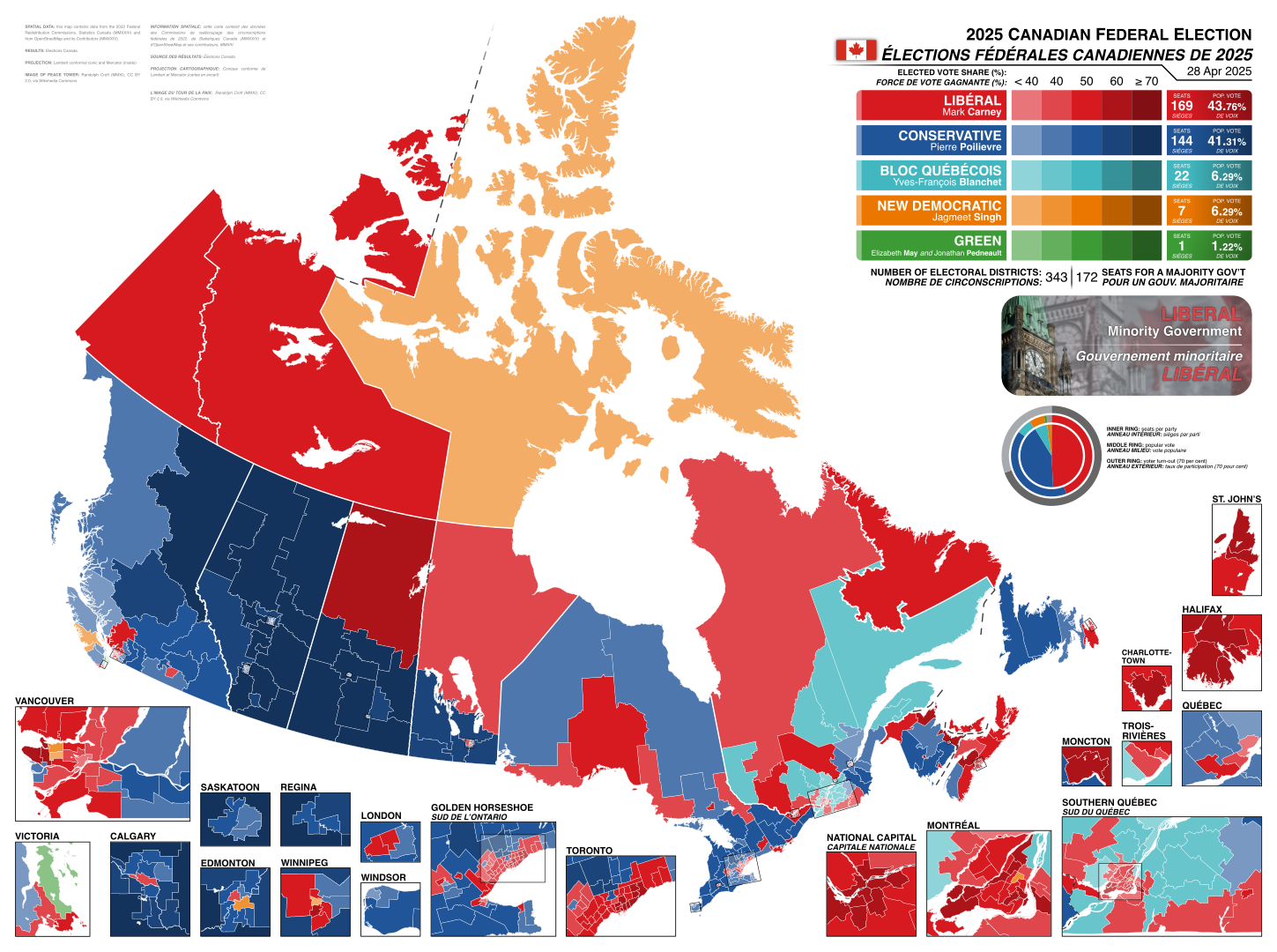
On April 28, 2025, Canada’s New Democratic Party lost 17 seats and official party status. During one of the most critical election campaigns in recent Canadian history, in which existential questions about the future of the country’s economy were on the table, Canada’s official social democratic party was pushed into the background and relegated to a marginal role.
A few months later, Zohran Mamdani gained international attention by securing the Democratic Party nomination as mayoral candidate for New York City. Mamdani ran as an avowed democratic socialist, making no secret of his support for Palestinian liberation.
It seems clear, based on the results of the last series of Canadian federal elections, that the NDP has failed to represent any kind of political alternative to the establishment parties. This fact, paired with the unexpected success of a grassroots-oriented socialist candidate south of the border, raises the question of whether the NDP is capable of posing a genuine political challenge to the dominant system. It also leads us to ask: how should those of us who are committed to fighting for working people engage with the electoral system?
When discussing a working class political alternative to the Liberals and Conservatives, the NDP is a natural enough starting point. It is a party that emerged from Canada’s labour and democratic socialist movements, and it continues to frame itself as the voice of Canada’s working class.
The NDP, however, has generally failed to live up to this ambition. It has drifted more and more in line with the mainstream political parties, becoming more professionalized, less willing to fight for working people, and farther away from the grassroots struggles that created it.
This is not just because of the personal proclivities of Jagmeet Singh, or Tom Mulcair, or even Jack Layton. It is the consequence of the NDP’s strategy, which has led it to become dependent on electoral politics. In turn, it has been subject to the incentives of the Canadian electoral system. Responding to these incentives, the party has moderated itself, abandoned its more ambitious goals, and placed decision-making in the hands of a circle of professional staffers surrounding the leader’s office.
If we want to see a serious political challenge to the status quo in this country, which can put forward a platform that represents the interests of working people and which is not afraid to fight for it, we cannot expect the NDP to deliver. It has simply conceded too much, and become too tied to the dominant system.
Rather than expecting change to come from an election campaign, where the rich and powerful have disproportionate influence, we need to look towards the areas where we can build power: our workplaces and neighbourhoods. Rather than putting forward motions to reform an electoral party like the NDP, we should build our power by organizing directly, fighting back against exploitation, and asserting ourselves by putting forward our own political program.
To lead this resurgent working class movement, a political party is necessary. But not a party like the NDP, which judges its success based on its short-term electoral results. We need a political party that is built from organizers and working people, which aims at taking power from the wealthy, and which does not hesitate to take militant action to fight for working people – not limited by the letter of the law or the sensibilities of the upper class.
The NDP Has Defied All Attempts to Transform It
The idea that the NDP can be transformed into a more militant, grassroots “movement” party is not a new one. There have been many attempts to transform the NDP, and each has ended in defeat.In 1969, at a time when radical youth and workers’ movements were surging across the world, a group that came to be known as the Waffle issued a manifesto to push the NDP towards becoming a political vehicle for radical change. They drew on ideas from socialist and national liberation movements, arguing that Canada was subjugated by American capitalism, and that the only way for the country to fully flourish was to develop an independent, socialist economy governed by principles of public ownership and democratic control.
The Waffle put these questions to the membership of the NDP. Although they seemed to make some inroads among the membership, they were voted down at just about every juncture, with their most decisive defeats coming during the 1971 NDP Federal Convention and the 1972 Ontario Convention (at which the Waffle was expelled from the NDP). After a couple years of trying to move forward as an independent party, they dissolved in 1974.
Around 30 years later, a group within the NDP called the New Politics Initiative came together with the intention of re-orienting the NDP towards ‘social change movements’ (and vice versa). Rather than putting forward a platform committed to socialism, it was united by a desire to democratize the NDP and build a stronger connection between the party and progressive movements. Although the NPI’s main proposal was defeated at convention in 2001, Jack Layton was seen as a sympathetic figure by the group. After he won the leadership of the NDP in 2003, the NPI voluntarily dissolved, believing to some extent that Layton’s victory would bring about the transformations that they sought.
In reality, however, Jack Layton’s tenure at the head of the NDP saw the party become more professionalized and move farther from grassroots movements. By the time Tom Mulcair led the party into the 2015 federal election, the NDP was less distinguishable than ever from the Liberals and Conservatives. A group of activists and intellectuals released the Leap Manifesto in that year, intending to put forward an alternative policy platform that stressed progressive principles including public investment, environmentalism, and Indigenous reconciliation. Although the manifesto generated discussion within the NDP, it was unable to decisively influence the party’s policy.
Of the three attempts to reshape the NDP mentioned above, all were ultimately unsuccessful for similar reasons. In each case, grassroots engagement was defeated by the party leadership and its allies, who succeeded in beating back attempts at pushing the party in a more ambitious direction. Whether through defeating and expelling the opposition (as with the Waffle), co-opting them (as with the NPI), or ignoring them (Leap Manifesto), the NDP’s leadership was able to ensure that it had a free hand to shape the party as it saw fit.
The story of the NDP is similar to that of many other social democratic parties in the western world. These parties have seen the growing power of political staffers, an ideological march to the centre, and an abandonment of the very working class struggles that parties like the NDP grew out of. It is the story of a party becoming increasingly integrated into mainstream, status quo politics, and of a grassroots membership which is increasingly shut out of meaningful decision-making.
Why have all these attempts at transforming the NDP failed? Moreover, what kind of party is the NDP turning into, and what does it mean to become integrated as a mainstream political party in Canada?
Canada’s Electoral System Incentivizes Professional, Marketing-Style Politics
The history of the NDP highlights the ways in which our electoral system puts enormous pressure on parties to conform to the status quo. While participating in the electoral system, parties are increasingly incentivized to play by its rules. Success becomes measured by vote-share, and ‘electability’ becomes the ultimate strategic objective.
Modern elections are resource-intensive, time-consuming, and highly specialized. In order to compete at the ballot box, parties are under pressure to adopt a ‘permanent campaign’ approach, in which electoral campaigning comes to characterize all of a party’s actions. Parties are engaged in year-round fundraising and electoral preparation, subordinating other considerations to the central one - being ready to grab as many seats as possible at any given time. This also involves an intensive focus on media messaging, and an attempt to maintain strict internal discipline.
Permanent campaigning incentivizes internal changes in a party to meet these demands of constant electioneering. Party staffers, pollsters, and communications professionals are given more control in order to ensure that all of a party’s activities are subjected to message discipline and electoral strategy.
This results in the actions of elected representatives and party organizers becoming tightly restricted based on the strategy pursued by a tight clique of paid professionals organized around the party leader. Inevitably, this means the suppression of grassroots engagement. The role of rank-and-file party members becomes a passive one – not to shape the party through lively democratic debate but merely to volunteer their time to help the leader get elected.
To compete with one another during election cycles, the NDP and other Canadian parties are incentivized to adopt a “marketing” style of politics. The marketing-oriented politics of Canadian political parties (as described by Marland and Giasson) involves an approach where parties tailor their messaging, as well as their policy platform, to appeal to a significant enough share of the electorate to translate into success at the polls.
This pushes parties to abandon ambitious programs in favour of short-term popularity, subordinate their activities to the demands of media messaging, and stifle grassroots engagement. Parties are increasingly dominated by political professionals, who are both economically and ideologically invested in maintaining the dominant system.
In a system like this, the winners are those who succeed at selling a narrative. Who have the resources, connections, and profile to produce ads, control the media cycle, and blanket neighbourhoods with canvassers and signs; and who are savvy enough to appeal to as many people as possible without committing themselves to much concrete action.
In order to capture a large vote share, parties have an incentive to target groups that they can draw on immediately for support on election day. On the one hand, this can mean de-emphasizing or abandoning entirely more ambitious objectives, and focusing on appealing to voters based on their existing opinions rather than doing the difficult work of persuading, organizing, and developing political consciousness. Since middle class and rich people are more likely to show up to vote, in practice this may also translate to parties engaging less with working class neighbourhoods.
The NDP Will Not Save Us
The electoral system exerts a strong influence on the parties that engage with it, pushing them toward short-term electoral strategy, a hyperfocus on media messaging, and the internal dominance of political professionals. These changes come at the expense of carrying out longer term strategies and encouraging genuine debate and engagement by the grassroots membership.
In other words, the electoral system creates a system of incentives that pushes parties to adopt a status-quo style of politics. This form of politics sees political parties like marketing firms, and voters like consumers.
It molds these parties in the image of the capitalist system, toning down their viewpoints and placing them in the hands of educated professionals - in other words, making them more palatable to the rich and powerful. Private consultants can promote empty egalitarianism without seriously threatening shareholder value.
After all, how can a party pose a real challenge to the capitalist status quo if it is reliant on a media ecosystem owned by the capitalist class, if it craves respectability, avoids challenging dominant ways of thinking, and allows its course to be dictated by a class of staffers with a vested interest in the current system?
Despite its working class and socialist origins, the NDP has followed this trajectory, just as other parties have. Engagement with the Canadian electoral system has incentivized the NDP to delegate more authority to paid staffers, to wall off its policy-making process from membership, and to adopt a non-threatening posture towards established elites.
The result has been that every time a grassroots movement has attempted to engage with the NDP, and push it to deliver on its promise of fighting for working people, it has been successfully suppressed, co-opted, or ignored by the party leadership.
When considering the forces pushing the NDP to conform, it is hardly surprising that grassroots movements have had such a difficult time influencing the party. They are not just up against an entrenched party bureaucracy, or a few opportunist leaders, but the whole system into which the NDP has become integrated.
Building A Real Political Alternative
What does all this mean for those who want to mount a political challenge to capitalism itself – a project that goes beyond vote-chasing?
We have been led to believe that politics is something that happens during elections and in parliament, and that our role as regular people is to show up to vote every now and then. We don’t have to accept this. Instead of trying to take on the rich and powerful on their own terrain, we should fight them in the arenas where we can gain an advantage and win.
A movement that can truly threaten the ruling class, and which can represent the organized power of working people, must be built outside of elections. Collective action is our most important tool: strikes, demonstrations, disruptions, and mass communication. It is by getting organized and taking collective action that we can build our power, and create a political force which is actually capable of fighting back against the rich and powerful. We have to take the struggle to our workplaces, our neighbourhoods, and to the streets.
This is not to say that there is no place for a political party in such a project. Quite the opposite, in fact. A movement needs coordination and leadership. We need an organization which can draft and fight for a program, which can develop strategy, and which can make the tactical shifts necessary to adjust to changing political winds. One capable not just of picking up the odd vote, but of fighting on every possible front to change the system.
A political party can fulfil this role. But this party should be of a different type from the electoral apparatuses that are familiar to us. We need a political party that stands proudly at the head of a fighting movement. It should be a party that views the long term defeat of the capitalist system as its objective, which forges a membership composed of organizers who take a leadership role in working class and other struggles (rather than just shopping for votes), and which is not afraid to go outside the boundaries of status quo politics and defy attempts at co-option.
Engagement in elections may be one activity that this movement could engage in, but it should be seen as a single tool among many. To put forward a serious alternative to ruling class politicians, we need to build fighting strength and organize where we live, work, and study.
A renewed NDP won’t cut it — and if history is any indication, any attempt to transform the NDP into a more radical anti-establishment force is ultimately doomed.
If we are interested in establishing a new political leadership which can actually fight back against the ruling class and win major victories for working people - we need to build something new.
